
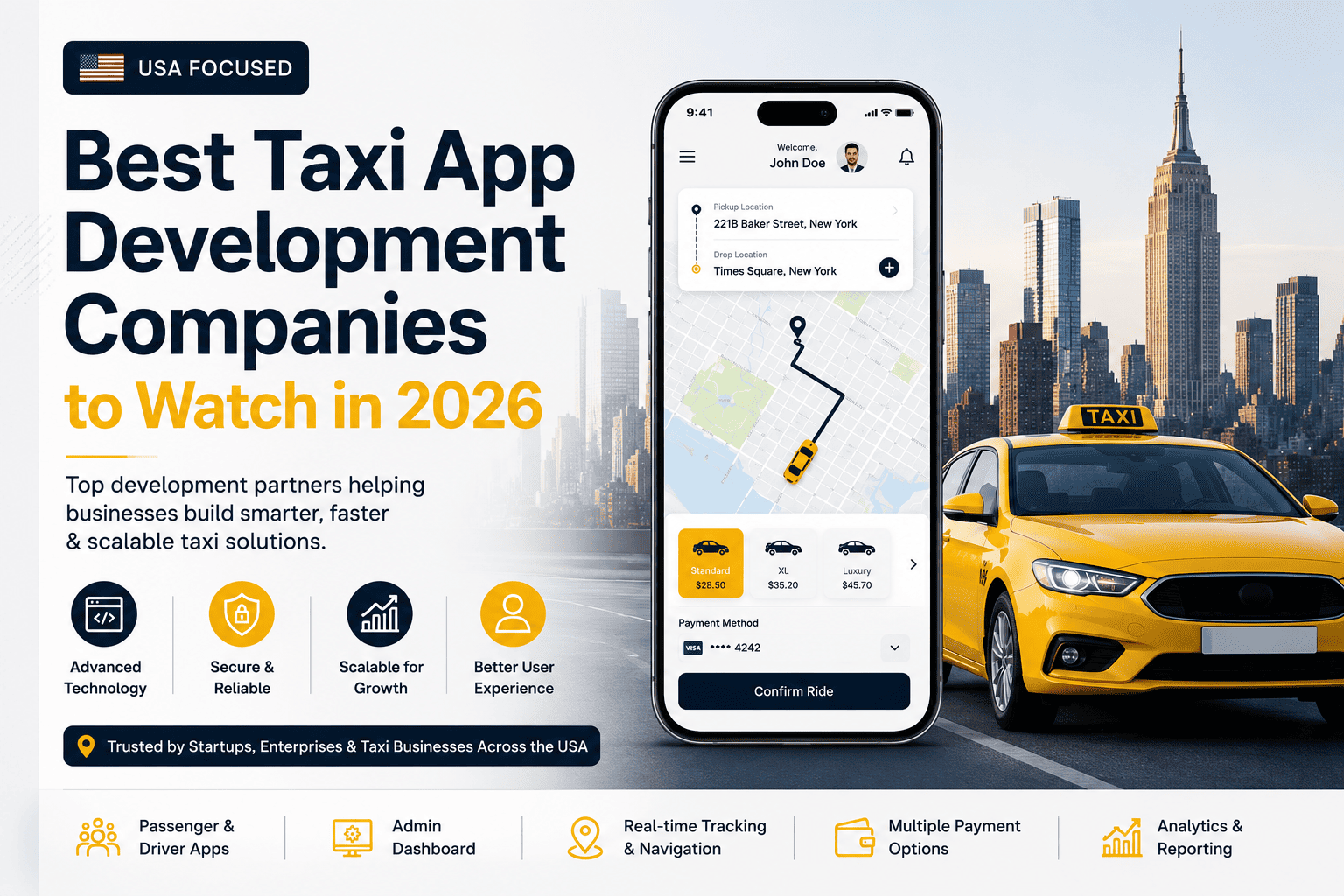
The ride-hailing industry continues to evolve at an impressive pace. Artificial intelligence, electric vehicles, autonomous driving technologies, integrated payment systems, and hyperlocal mobility solutions are transforming how people book and experience transportation. Businesses entering this market are no longer competing solely on price. They are competing on customer experience, operational efficiency, driver engagement, and platform scalability.
As demand for digital transportation services continues to increase across urban and suburban regions, selecting the right taxi app development company has become one of the most important business decisions. The right development partner can help businesses launch faster, reduce development risks, implement future-ready technologies, and build scalable mobility ecosystems capable of handling millions of users.
This guide highlights the best taxi app development companies to watch in 2026, explains the evaluation criteria, explores emerging trends, and helps businesses identify the ideal technology partner for long-term growth.
What Makes a Great Taxi App Development Company in 2026?
The taxi app market has become significantly more competitive. Successful development companies are expected to deliver more than attractive mobile applications. They must create complete mobility platforms that include passenger applications, driver applications, dispatcher dashboards, admin panels, analytics systems, payment integrations, and cloud infrastructure.
The most reliable companies generally offer:
- Custom mobile application development
- Android and iOS native development
- Cross-platform app development
- Cloud-native architecture
- AI-powered route optimization
- GPS tracking and navigation
- Multi-payment gateway integration
- Fleet management systems
- Driver onboarding modules
- Business intelligence dashboards
- Real-time notifications
- Scalable backend architecture
- Enterprise-grade security
- API integrations
- Ongoing maintenance and support
Companies with strong expertise in transportation technology also understand local compliance requirements, regional payment preferences, taxation models, and regulatory frameworks.
Key Evaluation Factors Before Selecting a Development Partner
Before reviewing the leading taxi app development companies, businesses should understand the criteria used to evaluate modern mobility development firms.
Industry Experience
Companies with years of experience in transportation technology usually understand the operational challenges associated with dispatch management, surge pricing, fleet monitoring, and customer engagement.
Technical Expertise
The development partner should possess expertise in technologies such as Flutter, React Native, Swift, Kotlin, Node.js, Laravel, AWS, Google Maps Platform, Firebase, PostgreSQL, Redis, Docker, and Kubernetes.
Scalability
The application should support rapid user growth without compromising performance during peak traffic.
Security Standards
Modern ride-hailing platforms process sensitive customer information, payment data, and location tracking. Security practices such as encrypted APIs, secure authentication, and compliance with international regulations are essential.
UI and UX Excellence
Simple navigation, quick booking flows, intuitive driver interfaces, and responsive dashboards improve user satisfaction and retention.
Long-Term Support
Launching an application is only the beginning. Continuous improvements, feature upgrades, security patches, and performance optimization are equally important.
Best Taxi App Development Companies to Watch in 2026
CloneAppz
CloneAppz has established itself as one of the leading mobility technology providers for startups, enterprises, and transportation businesses worldwide. The company specializes in scalable ride-hailing solutions that combine modern technologies with business-focused strategies.
Its development approach focuses on rapid deployment without compromising flexibility, allowing businesses to customize features based on regional market requirements.
Organizations looking for a reliable white label taxi app solution often consider CloneAppz because it enables faster market entry while supporting extensive customization options for branding, pricing models, user roles, and operational workflows.
Key strengths include:
- AI-enabled dispatch systems
- Multi-city operations
- Driver and passenger applications
- Fleet management
- Admin analytics dashboards
- Multi-language support
- Multiple payment gateways
- Enterprise security architecture
- Cloud deployment
- Ongoing product enhancements
CloneAppz also offers consultation services to help businesses identify suitable monetization strategies before development begins.
Deliverable Agency
Deliverable Agency has gained recognition for building scalable digital products with a strong focus on user experience and operational efficiency. Their transportation solutions are designed to help startups and enterprises launch competitive ride-booking platforms with modern technology stacks.
The company emphasizes agile development methodologies, enabling faster product iterations and continuous feature improvements. Their expertise extends across custom mobility applications, fleet management systems, and real-time analytics solutions.
Notable capabilities include:
- Cross-platform mobile development
- Real-time GPS tracking
- Driver management systems
- Customer support integrations
- Payment gateway implementation
- Cloud infrastructure deployment
- Business intelligence dashboards
Deliverable Agency is particularly suitable for businesses seeking customized transportation platforms with long-term scalability.
Appinventiv
Appinventiv is a globally recognized software development company with extensive experience across mobility, fintech, healthcare, logistics, and enterprise software.
Their transportation solutions leverage artificial intelligence, cloud computing, machine learning, IoT, and predictive analytics to improve fleet efficiency and customer experiences.
Core offerings include:
- Enterprise mobility platforms
- AI-powered route optimization
- Real-time driver tracking
- Customer loyalty systems
- Scalable cloud architecture
- Business automation
- Predictive analytics
- API integrations
Their experience with enterprise-grade applications makes them a preferred choice for organizations planning large-scale mobility platforms.
Hyperlocal Cloud
Hyperlocal Cloud specializes in hyperlocal business applications and on-demand service platforms. Their expertise covers transportation, delivery, grocery, courier, and service marketplaces.
The company focuses on providing flexible mobility solutions that allow businesses to launch quickly while maintaining room for future customization.
Their transportation platform includes:
- Passenger booking applications
- Driver applications
- Dispatch management
- Admin control panels
- Live location tracking
- Dynamic pricing
- Wallet integration
- Push notification systems
Hyperlocal Cloud is particularly attractive for startups seeking rapid deployment combined with flexible feature expansion.
Suffescom Solutions
Suffescom Solutions has built a strong reputation in developing enterprise-grade transportation platforms powered by emerging technologies.
The company provides custom ride-hailing platforms with AI integration, cloud infrastructure, and advanced analytics capabilities.
Their expertise includes:
- Custom mobility software
- Fleet automation
- GPS navigation
- Driver verification
- Business intelligence
- Cloud-native deployment
Quytech
Quytech develops digital mobility platforms for startups and enterprises focusing on innovation and intelligent transportation.
Their services include:
- Mobile application development
- Real-time ride tracking
- Driver analytics
- Payment integrations
- Cloud infrastructure
- AI implementation
They also work on connected mobility solutions and smart transportation technologies.
OpenXcell
OpenXcell is known for delivering scalable enterprise applications across various industries, including transportation.
The company focuses on:
- Native mobile applications
- Cloud architecture
- API development
- GPS tracking
- Security implementation
- Analytics dashboards
Their agile development process enables faster product releases and continuous optimization.
Techugo
Techugo has delivered transportation applications for global clients by combining modern user experiences with scalable engineering practices.
Their transportation solutions feature:
- Intelligent booking workflows
- Driver management
- Customer engagement tools
- AI recommendations
- Secure payment processing
- Cloud deployment
ValueCoders
ValueCoders offers dedicated software development services for transportation businesses seeking scalable digital transformation.
Their expertise includes:
- Ride-booking applications
- Fleet management
- Driver verification
- Dispatch automation
- Payment integrations
- Cloud-native backend development
Simform
Simform specializes in digital engineering and enterprise application development.
Transportation businesses choose Simform for:
- Microservices architecture
- Cloud migration
- Scalable backend systems
- DevOps implementation
- AI integrations
- Continuous performance optimization
Technologies Powering Modern Taxi Platforms in 2026
Today’s ride-hailing platforms require sophisticated technology stacks capable of supporting millions of transactions while maintaining high availability.
Mobile Development
- Flutter
- React Native
- Swift
- Kotlin
Backend Development
- Node.js
- Laravel
- Django
- Spring Boot
Database Technologies
- PostgreSQL
- MongoDB
- Redis
- MySQL
Cloud Infrastructure
- AWS
- Google Cloud
- Microsoft Azure
Mapping Services
- Google Maps
- Mapbox
- HERE Maps
AI Technologies
Artificial intelligence enables:
- Intelligent route optimization
- Demand prediction
- Dynamic pricing
- Driver allocation
- Fraud detection
- Customer behavior analysis
Essential Features Every Taxi Platform Should Include
Modern ride-booking platforms should provide a comprehensive experience for passengers, drivers, and administrators.
Passenger Features
- Instant ride booking
- Fare estimation
- Multiple payment methods
- Live tracking
- Ride scheduling
- Trip history
- Ratings and reviews
- SOS assistance
- In-app chat
- Push notifications
Driver Features
- Ride acceptance
- Route navigation
- Earnings dashboard
- Availability controls
- Wallet management
- Performance reports
- Incentive tracking
- Customer communication
Admin Features
- Driver management
- Customer management
- Fleet monitoring
- Revenue reports
- Dynamic pricing
- Coupon management
- Commission settings
- Business analytics
How Artificial Intelligence Is Reshaping Ride-Hailing Applications
Artificial intelligence is becoming a competitive advantage rather than an optional feature.
Modern AI capabilities include:
- Smart ride matching
- Predictive demand forecasting
- Automated customer support
- Driver performance evaluation
- Personalized promotions
- Fraud prevention
- Route optimization
- Intelligent dispatching
These technologies reduce operational costs while improving customer satisfaction.
Why Businesses Continue Investing in On-Demand Mobility Platforms
Consumer expectations have shifted toward convenience, speed, and digital accessibility.
Organizations invest in ride-booking technology because it offers:
- Recurring revenue opportunities
- Higher customer retention
- Improved fleet utilization
- Better operational visibility
- Scalable business expansion
- Digital brand presence
- Data-driven decision making
Transportation businesses can also diversify into logistics, courier services, corporate transportation, airport transfers, and subscription-based mobility services.
When Should Businesses Consider Building an Uber-Inspired Platform?
Many startups enter the transportation market by studying proven business models before developing unique service offerings. Choosing an experienced development partner with expertise in an uber clone project can significantly reduce development timelines while providing a flexible foundation for adding innovative features, localized services, and custom business workflows that differentiate the platform from competitors.
Future Trends Driving Taxi App Development Beyond 2026
The transportation industry will continue evolving through emerging technologies.
Some of the most influential trends include:
- Autonomous vehicle integration
- Electric vehicle fleet management
- AI-driven dispatch automation
- Voice-assisted booking
- Blockchain payment verification
- Predictive maintenance
- Smart city integration
- Connected IoT vehicles
- Carbon footprint tracking
- Subscription-based transportation
Companies investing in these technologies today will be better positioned for future market demands.
How to Select the Best Technology Partner for Long-Term Success
Choosing the right development company requires careful analysis of technical capabilities, project management processes, industry expertise, and post-launch support.
Businesses should evaluate:
- Portfolio quality
- Industry specialization
- Technical architecture
- Client reviews
- Development methodology
- Security standards
- Maintenance capabilities
- Pricing transparency
- Communication process
- Product roadmap support
A reliable partner will not simply develop software but will contribute strategic guidance throughout the product lifecycle.
Conclusion
The global mobility industry continues to experience rapid technological transformation, making 2026 an excellent time for businesses to invest in modern ride-hailing platforms. However, long-term success depends heavily on selecting an experienced development company capable of delivering scalable architecture, intelligent automation, enterprise security, and continuous innovation.
Companies like CloneAppz, Deliverable Agency, Appinventiv, Hyperlocal Cloud, Suffescom Solutions, Quytech, OpenXcell, Techugo, ValueCoders, and Simform have demonstrated strong capabilities across transportation technology. By evaluating their technical expertise, industry experience, and long-term support, businesses can choose a development partner that aligns with their growth strategy and future mobility goals.
Frequently Asked Questions
What should I look for when choosing a taxi app development company?
Look for industry experience, technical expertise, scalable architecture, security standards, cloud capabilities, AI integration, client portfolio, maintenance support, and transparent development processes.
How much does taxi app development typically cost?
The overall cost depends on application complexity, number of features, supported platforms, third-party integrations, customization requirements, and ongoing maintenance. Enterprise-grade platforms generally require a larger investment than MVP solutions.
How long does it take to build a taxi application?
A basic MVP may take around 3 to 5 months, while feature-rich enterprise transportation platforms typically require 6 to 12 months depending on customization and integrations.
Which technologies are commonly used for taxi app development?
Popular technologies include Flutter, React Native, Swift, Kotlin, Node.js, Laravel, Django, PostgreSQL, Redis, AWS, Google Cloud, Firebase, Docker, and Kubernetes.
Is AI important for modern ride-hailing applications?
Yes. AI improves dispatch efficiency, demand forecasting, fraud detection, route optimization, dynamic pricing, customer support automation, and overall operational performance.
Can a taxi application support multiple cities and countries?
Yes. Modern transportation platforms can support multi-city operations, multiple currencies, different languages, regional tax structures, localized payment methods, and country-specific compliance requirements.
What are the essential modules of a ride-hailing platform?
A complete platform generally includes passenger apps, driver apps, dispatcher dashboards, admin panels, fleet management systems, analytics dashboards, payment gateways, notification systems, and customer support modules.
Why is cloud infrastructure important for taxi applications?
Cloud infrastructure provides high availability, scalability, automatic backups, disaster recovery, better performance, and the ability to handle growing user traffic without major infrastructure limitations.
