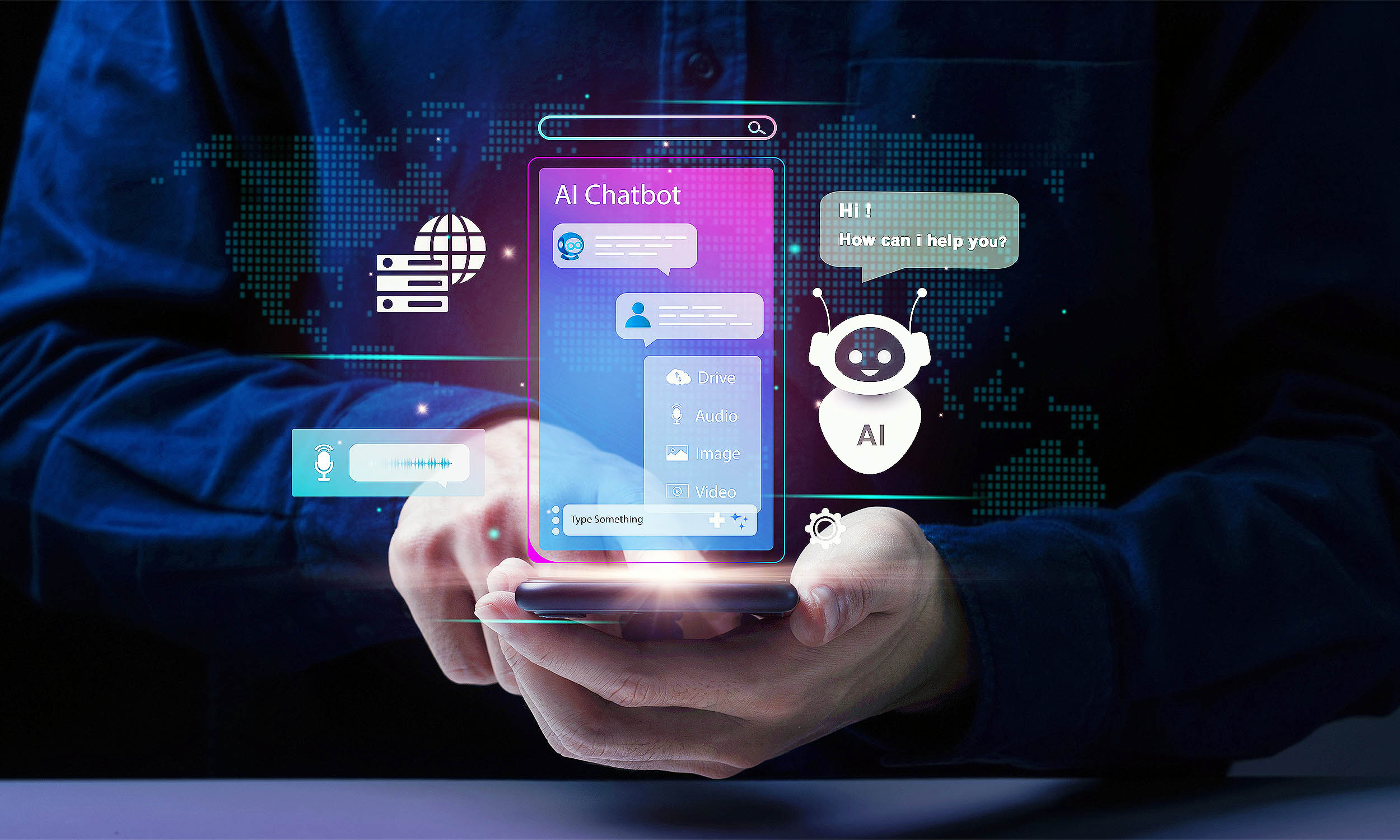
If you have visited a website in the past year and seen a small chat window pop up in the corner asking if you need help, you have already interacted with an AI chatbot. What used to feel like a novelty is now a standard feature on websites across every industry.
And the numbers tell a very clear story.
According to a 2025 report by Grand View Research, the global chatbot market is currently valued at around 9 to 10 billion dollars and is projected to surpass 27 billion dollars by 2030, growing at a compound annual growth rate of 23.3 percent. That kind of sustained growth does not happen by accident. It happens because AI chatbots are delivering real, measurable results for businesses of all sizes.
This article covers what AI chatbots actually do, the real benefits they bring to websites, how leading businesses are using them right now, and what the data says about their impact. Whether you are a small business owner or a digital marketer, this guide will give you the full picture.
What Is an AI Chatbots for Websites?
An AI chatbot is a software application that uses artificial intelligence, natural language processing, and machine learning to communicate with website visitors in real time. Unlike the older rule-based chatbots that could only respond to a fixed set of commands, modern AI chatbots understand conversational language, learn from past interactions, and handle complex queries with accuracy.
When embedded on a website, an AI chatbot can greet visitors, answer product questions, collect leads, book appointments, process orders, resolve support issues, and guide users through the buying journey, all without any human involvement.
Today’s chatbots are far more capable than they were even three years ago. They can maintain context across a conversation, detect sentiment, switch between languages, and seamlessly hand off to a human agent when needed. For businesses, this level of automation was previously only achievable with large customer service teams.
The State of AI Chatbots: What the Data Says
Before diving into benefits and use cases, it helps to understand just how widely adopted AI chatbots have become and why the adoption curve keeps climbing.
Here are the most important data points from recent research:
- AI chatbots can manage up to 80 percent of routine customer inquiries without human intervention, according to DemandSage.
- 67 percent of consumers worldwide have engaged with a chatbot for customer support in the past year (Invesp).
- Chatbot adoption across businesses grew roughly 4.7 times between 2020 and 2025 (Fullview).
- 62 percent of consumers prefer using chatbots over waiting to speak with human agents (Tidio).
- Companies using AI chatbots report 33 to 45 percent reductions in average handle times and up to 30 percent improvement in first-contact resolution (Fullview).
- 57 percent of companies say chatbots deliver significant ROI within the first year (Jotform).
- The average chatbot ROI is approximately 1,275 percent, based on support cost savings alone (Tidio).
- By 2027, 25 percent of organizations will use chatbots as their primary customer service channel (Gartner).
These are not predictions from optimistic startups. These are verified data points from some of the most respected research organizations in the industry. The direction is unambiguous.
Core Benefits of AI Chatbots for Websites
1. 24/7 Availability Without Extra Cost
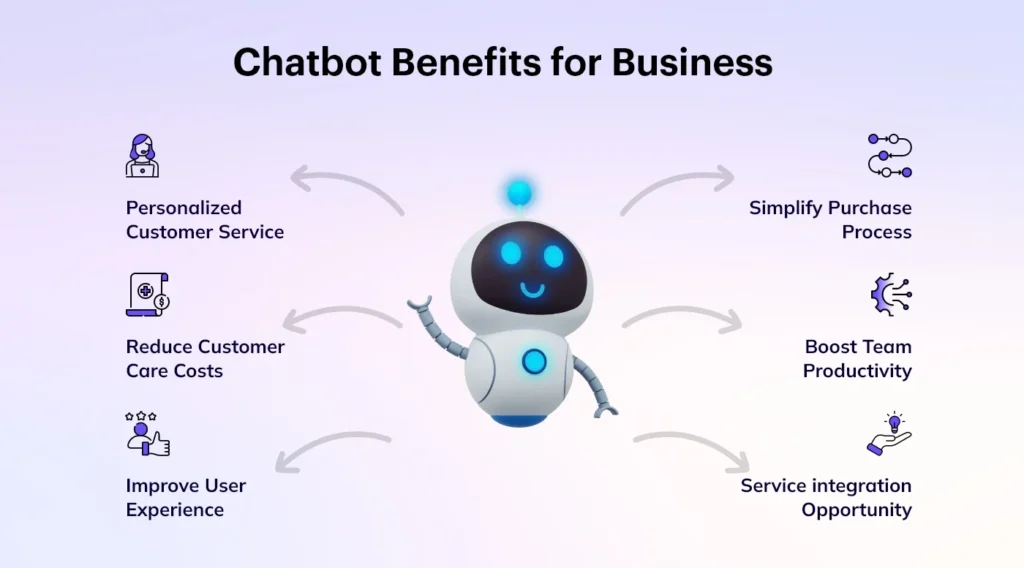
This is one of the most straightforward and powerful benefits of an AI chatbot. Customers do not shop, ask questions, or need support only between 9 AM and 5 PM. They engage with businesses at all hours, including late nights, weekends, and public holidays.
A human support team cannot be available around the clock without significant cost. An AI chatbot can.
Research shows that AI chatbot usage actually peaks between 8 PM and 11 PM, exactly the hours when most businesses have no one available to respond. By being present during these hours, chatbots capture leads, resolve issues, and retain customers that would otherwise leave without getting help.
The direct result is higher customer satisfaction, lower bounce rates, and more conversions across every hour of the day.
2. Significant Cost Reduction
Customer support is one of the highest operational costs for most businesses. AI chatbots directly reduce that cost by automating a large portion of routine interactions.
According to data from Hyperleap AI, companies implementing AI chatbots save an average of 2.5 million dollars annually through reduced customer service costs and increased efficiency. At a broader level, businesses can reduce customer service costs by 30 to 40 percent by handling routine inquiries and qualifying leads through chatbots.
Gartner projects that AI chatbots will contribute to an 80 billion dollar reduction in contact center labor costs by 2026. That is not a small efficiency gain. That is a structural shift in how businesses operate.
3. Faster Response Times
Speed matters enormously in customer experience. Research from HubSpot found that responding to customer queries within five minutes can increase conversion rates by up to 22 percent. Most businesses cannot respond that quickly manually.
AI chatbots deliver first responses in an average of 11 seconds. Compare that to the 4-plus hours typical of email support and the 15 to 20 minutes common in traditional live chat queues. The gap is significant, and customers notice.
When a visitor asks a question and gets an answer within seconds rather than hours, their confidence in the business increases, and they are far more likely to convert.
4. Higher Lead Generation and Conversion Rates
AI chatbots are not just support tools. They are active contributors to revenue. By engaging website visitors proactively, qualifying leads, and guiding users toward the right product or service, chatbots improve conversion rates across the board.
Data from Dashly shows that businesses using AI chatbots achieve three times better conversion rates into sales compared to those relying on website forms alone. Gartner reports that 24/7 chatbot support can lead to a 20 to 30 percent increase in sales conversions.
One e-commerce business reported a 25 percent increase in conversion rates after deploying an AI chatbot on their website. Online stores also see a median order value increase of 20 percent within the first seven days of chatbot implementation (Tidio).
These numbers reflect a simple truth: a chatbot that engages a visitor at the right moment, with the right message, converts more of them into customers.
5. Improved Customer Satisfaction
There is a common assumption that customers prefer human agents over chatbots. The data tells a more nuanced story.
According to Zoom and Morning Consult, 77 percent of chatbot users successfully resolve their issues without human intervention at least sometimes. Among those users, 69 percent prefer self-service resolution when it is available. A report from Tidio found that 69 percent of consumers were satisfied with their last chatbot interaction.
Importantly, 87.2 percent of consumers have had positive or neutral experiences with chatbots, according to Ecommerce Bonsai. Negative experiences are the exception, not the rule, and they are typically caused by poorly configured chatbots, not the technology itself.
When a chatbot is set up correctly, trained on relevant content, and given clear escalation paths to human agents, customer satisfaction improves consistently.
6. Scalability During High-Traffic Periods
Seasonal spikes, product launches, and marketing campaigns can overwhelm even well-staffed support teams. An AI chatbot scales instantly with demand. It can handle ten conversations or ten thousand with the same speed and quality.
For e-commerce businesses during sales events, this scalability is invaluable. Instead of hiring temporary staff or letting customers wait in long queues, a chatbot absorbs the surge while maintaining consistent response quality.
One study found that companies using AI customer service platforms reduced their staffing needs by 68 percent during busy periods while maintaining high satisfaction scores.
Real-World Use Cases with Proven Results
Sephora: Personalized Beauty Recommendations at Scale
Sephora is one of the most frequently cited examples of successful AI chatbot implementation, and for good reason.
The global beauty retailer deployed an AI chatbot across Facebook Messenger, its website, mobile app, and in-store interfaces. The chatbot was trained on beauty-specific knowledge and designed to help customers with product recommendations, shade matching, skincare routines, loyalty point queries, and order tracking.
The results were remarkable. Over 75 percent of daily customer inquiries were resolved by the chatbot without any human involvement. Average response time dropped from several minutes to under 10 seconds. Cart abandonment decreased by 18 percent among users who engaged with the chatbot during their shopping journey. Customer service operational costs dropped by 20 percent.
Beyond support metrics, Sephora’s broader AI integration contributed to its e-commerce net sales growing from 580 million dollars in 2016 to over 3 billion dollars in 2022, representing a fourfold increase over six years.
Bank of America: Erica, the Virtual Financial Assistant
Bank of America launched its AI-powered virtual assistant Erica to help customers manage their finances digitally. Erica handles tasks like checking account balances, flagging unusual transactions, sending bill payment reminders, and providing financial guidance.
Since launching, Erica has handled hundreds of millions of client interactions. It has fundamentally changed how Bank of America’s customers interact with the bank, shifting a large proportion of routine service requests away from branches and call centers to a self-service AI experience available at any time on any device.
The success of Erica reflects a broader banking trend. As of 2022, over 98 million Americans (roughly 37 percent of the US population) had interacted with a bank’s chatbot. That number is projected to reach 110.9 million users by 2026.
Domino’s Pizza: Simplifying Orders Through Conversational AI
Domino’s integrated an AI chatbot called Dom to allow customers to place pizza orders through text, voice, and social media. The chatbot processes orders instantly, offers personalized deals based on order history, and provides real-time delivery tracking.
The impact was measurable. Domino’s reduced resolution times by 25 percent after implementing its AI-powered chatbot, leading to higher satisfaction scores and increased sales, particularly during peak ordering periods. The simplicity of ordering through a conversational interface also contributed to stronger customer retention.
H&M: Fashion Advice That Converts
H&M deployed a chatbot designed to act as a personal fashion stylist. The chatbot engages customers by asking about their style preferences, occasion needs, and size requirements, then recommends products accordingly.
The outcome was improved customer satisfaction and reduced shopping time, which translated into higher conversion rates. For a fashion retailer competing in an intensely crowded market, the ability to provide personalized guidance at scale without a human stylist on call gave H&M a meaningful competitive advantage.
OPPO: Handling High-Volume Inquiries During Shopping Events
OPPO, the global smart device brand, faced significant challenges managing high volumes of customer inquiries during peak shopping festivals. By implementing an AI chatbot and ticketing system, OPPO achieved an 83 percent chatbot resolution rate, meaning the vast majority of customer requests were resolved without human involvement.
The results extended beyond resolution rates. OPPO recorded a 57 percent boost in customer repurchase rates, reflecting how better service directly drives loyalty and repeat revenue. Positive customer feedback reached 94 percent, significantly above industry benchmarks.
Key Use Cases for AI Chatbots on Websites
Based on real business implementations and verified data, here are the most effective ways businesses are using AI chatbots on their websites today:
Customer Support Automation Handling FAQs, order tracking, returns, account queries, and complaint resolution without human involvement. This is the most common use case and consistently delivers the highest immediate cost savings.
Lead Qualification and Generation Engaging website visitors, asking qualifying questions, and capturing contact details for follow-up. Chatbots qualify leads 24/7 so that sales teams focus their time on the highest-value prospects.
Appointment and Booking Management Allowing customers to schedule consultations, demos, or appointments directly through the chatbot without back-and-forth email exchanges. Sephora’s booking bot increased conversion rates by 11 percent through this approach alone.
E-Commerce Product Recommendations Guiding shoppers toward the right products based on their stated preferences, browsing behavior, and purchase history. This use case directly reduces cart abandonment and increases average order value.
Onboarding New Customers Walking new users through setup processes, product features, or service options conversationally, reducing friction in the early stages of the customer relationship.
Feedback and Survey Collection Collecting post-purchase or post-interaction feedback through conversation, which typically generates higher response rates than email surveys.
Multilingual Support Modern AI chatbots can communicate in multiple languages, allowing businesses to serve international audiences without hiring multilingual staff. AI chatbots maintain 91 percent accuracy across supported languages.
Industries Benefiting Most from AI Chatbots
While chatbots are effective across almost every sector, some industries have seen particularly strong results:
E-Commerce and Retail: 78 percent of e-commerce businesses use AI chatbots for order tracking, returns, and customer support. Retail spending on chatbots is projected to grow from 12 billion dollars in 2023 to 72 billion dollars by 2028.
Banking and Finance: 54 percent of customers already favor using finance chatbots for payment transactions. All ten of the largest commercial banks have integrated digital assistants into their client service strategies.
Healthcare: The healthcare chatbot market is estimated to reach 543.65 million dollars by 2026, driven by demand for appointment booking, symptom checking, and patient support.
Automotive: Over 90 percent of car dealerships in North America now feature chatbot support on their websites. Automotive chatbots successfully resolve about 90 percent of incoming questions without human input.
Real Estate: 28 percent of real estate businesses have implemented live chat technology, and over 72 percent of industry leaders are either planning or actively investing in chatbot solutions.
Challenges to Be Aware Of
AI chatbots are powerful, but they are not plug-and-play solutions that work perfectly from day one. Here are the real challenges businesses face:
Setup and Training Requirements: A chatbot is only as good as the information it is trained on. If it does not have access to your product data, FAQs, and company policies, it will give inaccurate or incomplete answers. Proper setup takes time and ongoing maintenance.
Handling Complex Queries: Chatbots excel at routine questions but struggle with nuanced, emotionally charged, or highly complex issues. A clear escalation path to human agents is essential for maintaining quality in these situations.
Customer Resistance in Certain Contexts: Some customers still prefer human interaction, particularly for sensitive topics or high-stakes decisions. Forcing customers through a chatbot when they want to speak to a person creates frustration rather than satisfaction.
Data Privacy Compliance: Chatbots collect and process customer data, which means businesses must ensure their chatbot setup complies with applicable data privacy regulations. This is especially important in healthcare, finance, and markets covered by regulations like GDPR.
Ongoing Optimization: A chatbot that is set up and then ignored will gradually deliver worse results as your products, services, and customer needs evolve. Regular auditing and updating are necessary for sustained performance.
How to Get Started with an AI Chatbot for Your Website
If you are considering adding a chatbot to your website, here is a straightforward approach to getting it right:
Step 1: Define your primary use case. Do you want to reduce support tickets? Generate more leads? Improve booking rates? Starting with a single, clear objective makes implementation and measurement far simpler.
Step 2: Choose the right platform. For small businesses, tools like Tidio, Freshchat, or Intercom are accessible and effective. For larger operations, platforms like Salesforce Einstein or Zendesk AI offer deeper integration and capability.
Step 3: Train the chatbot on your content. Feed it your FAQs, product pages, help documentation, and common customer queries. The more relevant information it has, the more accurately it will respond.
Step 4: Set up clear escalation paths. Make it easy for customers to reach a human agent when the chatbot cannot help. A chatbot that acknowledges its limits and transfers gracefully builds more trust than one that loops endlessly.
Step 5: Test before launching. Run the chatbot through realistic customer scenarios and identify gaps in its responses before it goes live.
Step 6: Monitor and optimize continuously. Track resolution rates, customer satisfaction scores, and drop-off points regularly. Use the data to improve the chatbot’s responses over time.
Final Thoughts
The data is clear, and the real-world case studies confirm it. AI chatbots are no longer an experimental add-on for websites. They are a proven business tool that reduces costs, improves customer experience, generates leads, and drives revenue across industries.
Businesses that added chatbots to their websites early have already seen compounding benefits in customer retention, operational efficiency, and conversion rates. Those that have not yet made the move are leaving real money on the table.
Whether you run an e-commerce store, a service business, a SaaS platform, or a local company, an AI chatbot configured correctly for your specific use case can deliver measurable results faster than almost any other digital investment.
At WaffleBytes, we help businesses design and implement digital strategies that are grounded in data and built for real growth. If you want to explore how an AI chatbot could work for your website specifically, our team is ready to help you get it right.
Frequently Asked Questions
An AI chatbot is a software tool that uses artificial intelligence to have real-time conversations with website visitors, answering questions, collecting leads, and resolving issues automatically without human agents.
Yes. Data shows businesses using AI chatbots achieve up to three times better sales conversion rates than those using forms alone, and e-commerce sites see median order values increase by 20 percent within the first week.
No. Many AI chatbot platforms offer affordable plans starting from as low as 20 to 50 dollars per month, making them accessible for businesses of all sizes, including small and medium enterprises.
E-commerce, banking, healthcare, automotive, and real estate see the strongest results. However, any business that handles customer queries, booking, or lead generation can benefit significantly from chatbot implementation.
No. AI chatbots handle routine, repetitive queries efficiently. Human agents remain essential for complex, sensitive, or high-value interactions. The best setup combines both working together seamlessly.
