The world of digital marketing is shifting fast. What worked three years ago may not even get you on page two today. Search engines have become smarter, users have become more demanding, and competition has intensified across every industry.
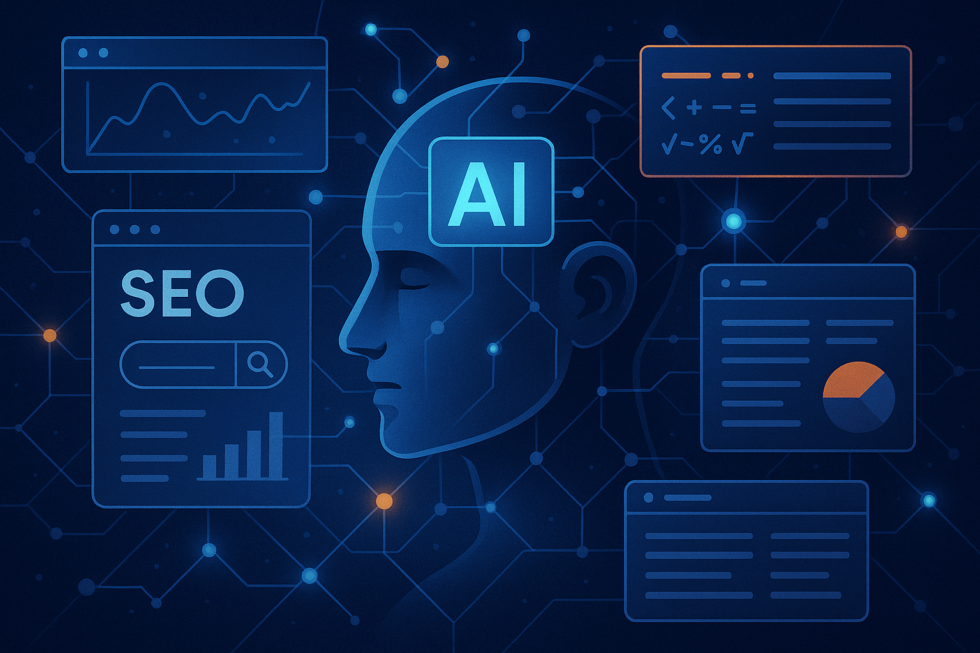
At the center of this transformation is artificial intelligence. AI SEO tools are redefining how businesses approach search engine optimization from keyword research to content creation, technical audits to competitor analysis. And the change is not gradual. It is happening right now.
If you are a business owner, marketer, or SEO professional trying to stay relevant, understanding how AI tools for SEO work and why they matter is no longer optional. It is a basic requirement.
This guide explains everything you need to know about AI SEO tools, how they are transforming digital marketing, and how you can start using them to grow your online visibility.
What Are AI SEO Tools?
AI SEO tools are software platforms that use artificial intelligence and machine learning to help businesses improve their search engine rankings. These tools go far beyond suggesting keywords. They analyze data, predict trends, identify content gaps, audit technical issues, and even generate content recommendations all in a fraction of the time it would take a human.
Traditional SEO relied heavily on manual work. You would research keywords in a spreadsheet, study competitors manually, and make educated guesses about what content might rank. AI-powered SEO changes all of that. These tools process millions of data points simultaneously and provide insights that are accurate, actionable, and updated in real time.
Popular AI SEO software includes tools like Semrush, Ahrefs, Surfer SEO, Clearscope, MarketMuse, and RankMath. Each one uses AI in different ways, but the goal is the same to make SEO faster, smarter, and more effective.
Why AI SEO Tools Are Becoming Essential in Digital Marketing
Digital marketing has always been data-driven, but the volume of data available today is overwhelming for any human team to process manually. This is exactly where AI in digital marketing fills the gap.
Here is why more businesses are switching to AI-driven SEO strategies:
- Speed: AI tools analyze websites, competitors, and keyword landscapes in seconds.
- Accuracy: Machine learning reduces guesswork by identifying patterns in large datasets.
- Scalability: Small teams can manage enterprise-level SEO campaigns with the right AI tools.
- Real-time insights: AI updates recommendations based on the latest algorithm changes and market shifts.
- Cost efficiency: Automated analysis reduces the need for large in-house SEO teams.
Google itself uses AI including systems like RankBrain, BERT, and MUM to evaluate content. It only makes sense that businesses use AI tools to keep up with the way search engines now think and rank.
How AI Is Transforming SEO Strategies
AI is not just improving how SEO tasks are done. It is fundamentally changing the strategy itself. Here are the key areas where AI-driven SEO strategies are making the biggest impact.
1. Smarter Keyword Research
Old-school keyword research was about finding high-volume, low-competition terms. AI takes it several steps further.
AI tools for SEO now analyze user intent behind every search query. They group keywords into topic clusters, identify questions users are asking, and predict which terms are gaining momentum before they peak. This means you are not just targeting keywords you are targeting the right keywords at the right time.
Tools like Semrush and Ahrefs use AI to map out keyword opportunities based on your website’s current authority, your competitors’ rankings, and seasonal search trends. You get a prioritized list of keywords that are actually winnable, not just popular.
2. Content Optimization at Scale
Creating content that ranks is harder than it looks. AI SEO software like Surfer SEO and Clearscope analyzes the top-ranking pages for any keyword and breaks down exactly what makes them rank word count, heading structure, related terms, question coverage, and more.
This means your content team no longer has to guess. They get a clear blueprint that tells them what to write, how long it should be, and which subtopics to cover. The result is content that is optimized for both search engines and real readers.
AI also helps with content auditing. It can scan your entire website, identify underperforming pages, and recommend specific improvements whether that is adding a section, updating statistics, or improving internal linking.
3. Competitor Analysis That Goes Deeper
Understanding your competitors is one of the most valuable things you can do in SEO. AI marketing tools make competitor analysis faster and more thorough than ever before.
Instead of manually reviewing dozens of competitor pages, AI tools can compare entire websites in minutes. They identify which keywords your competitors rank for that you do not, which pages drive the most traffic, what type of content performs best in your niche, and where backlink opportunities exist.
This level of analysis used to take weeks. With AI-powered SEO tools, it takes minutes and the insights are more accurate.
4. Technical SEO Audits
Technical SEO is the backbone of a well-optimized website. But crawling a large site for broken links, slow pages, duplicate content, indexing errors, and structured data issues is incredibly time-consuming without automation.
AI SEO tools like Screaming Frog (with AI integrations), Sitebulb, and Google Search Console’s AI-enhanced reports make technical auditing more efficient. They do not just find problems they prioritize them based on their impact on your rankings.
For businesses with large websites or e-commerce stores, this is a game changer. You can identify and fix critical technical issues before they damage your rankings, not after.
5. Search Trend Prediction
One of the most powerful capabilities of AI in digital marketing is its ability to predict what users will search for next. By analyzing historical search data, social media trends, news cycles, and seasonal patterns, AI tools can forecast emerging keywords and topics before they become competitive.
This gives forward-thinking businesses the ability to create content ahead of the curve. When a topic starts trending, your article is already published and indexed ready to capture traffic while competitors are still researching.
MarketMuse and similar platforms use AI to recommend content topics that align with your existing authority, maximizing your chances of ranking quickly.
Popular AI SEO Tools Used by Marketers Today
There are dozens of AI tools for SEO on the market. Here is a quick overview of some of the most widely used ones:
- Semrush – An all-in-one platform covering keyword research, competitor analysis, content optimization, and site auditing with AI-driven recommendations.
- Ahrefs – Known for its powerful backlink analysis and keyword explorer, now enhanced with AI content gap features.
- Surfer SEO – Specializes in AI-powered content optimization, scoring your content against top-ranking pages in real time.
- Clearscope – Helps writers optimize content for topical relevance using AI-driven keyword suggestions and grading.
- MarketMuse – Uses AI to build content strategies around topic authority and content gap analysis.
- RankMath – A WordPress SEO plugin with AI features for on-page optimization, schema markup, and keyword suggestions.
- ChatGPT / Claude – Used increasingly for content ideation, outline creation, meta description writing, and first drafts that are then optimized by humans.
Each tool serves a specific purpose, and most serious SEO strategies combine two or three tools for the best results.
Key Benefits of Using AI for SEO
Businesses that embrace AI-powered SEO gain real, measurable advantages. Here are the most important benefits:
- Faster decision-making: AI delivers insights in real time, helping teams act quickly on opportunities.
- Better content quality: AI-guided content is more relevant, structured, and complete.
- Improved rankings: Optimized content and technical fixes lead directly to higher search engine positions.
- Reduced human error: Automated audits catch mistakes that manual reviews often miss.
- Stronger ROI: More efficient use of time and budget leads to better returns from SEO investments.
- Competitive advantage: Businesses using AI tools simply outpace those relying on outdated, manual methods.
For small and medium businesses in particular, AI SEO software levels the playing field. You do not need a 20-person SEO team to compete with larger brands. You need the right tools and a smart strategy.
Challenges and Limitations of AI in SEO
AI is powerful, but it is not perfect. Understanding its limitations helps you use it more effectively.
Over-reliance on automation is one of the biggest risks. AI tools can generate recommendations, but they do not always understand your brand voice, your audience, or the nuances of your industry. Human judgment is still essential for final decisions.
Content quality concerns are also real. AI can help create content faster, but unedited AI-generated content often lacks depth, personal insight, and genuine expertise. Google actively evaluates content quality, and thin or generic content even if technically optimized will not rank well.
Data accuracy depends on inputs. AI tools are only as good as the data they analyze. If your website has incorrect tracking, poor analytics setup, or missing data, the recommendations may not be as reliable.
Cost can be a barrier. Premium AI SEO tools like Semrush and MarketMuse are powerful but come with subscription costs that can be significant for very small businesses or individual creators.
Finally, AI cannot replace creativity. The best-performing content is original, insightful, and genuinely useful. AI can optimize structure and coverage, but the ideas, perspectives, and stories still need to come from people.
The Future of SEO with AI
The future of SEO with AI is already taking shape, and the trajectory is clear AI will become more embedded in every part of the SEO process.
Search engines are moving toward AI-generated answers, multimodal search (combining text, image, and video), and increasingly personalized results. Tools like Google’s AI Overviews and Bing’s AI-powered search are changing how users interact with search results. For businesses, this means the goal is no longer just ranking on page one. It is about being the source that AI search systems reference and cite.
This makes content quality, topical authority, and structured data more important than ever. AI SEO tools will play a central role in helping businesses meet these new demands.
Expect to see AI tools that can:
- Automatically update existing content based on algorithm changes
- Generate and test multiple content versions to find what ranks best
- Provide real-time SEO recommendations as content is being written
- Integrate directly with CMS platforms for seamless optimization workflows
- Predict ranking shifts before they happen and recommend preemptive actions
Businesses that start building AI-driven SEO strategies today will have a significant head start when these capabilities become standard.
How to Get Started with AI SEO Tools
If you are new to AI in digital marketing, here is a practical approach to getting started:
- Audit your current SEO performance – Use a free tool like Google Search Console to understand where you currently stand.
- Choose one AI SEO tool – Start with a platform like Semrush or RankMath based on your budget and goals.
- Focus on content optimization first – Use AI to improve your existing top pages before creating new content.
- Use AI for keyword research – Let the tool identify intent-driven keywords that align with your audience.
- Fix technical issues – Run a site audit and prioritize fixes based on their SEO impact.
- Track and refine – Monitor your rankings, traffic, and engagement metrics regularly and adjust your strategy.
SEO is not a one-time task. It is an ongoing process. The good news is that AI makes managing that process significantly more manageable.
Final Thoughts
AI SEO tools are not replacing SEO professionals or digital marketers. They are making them more powerful. The businesses winning in organic search today are the ones combining human expertise with AI-driven insights moving faster, making smarter decisions, and creating better content.
Whether you are a startup trying to build your first audience or an established brand looking to maintain your competitive edge, AI in digital marketing is a force you cannot ignore. The tools are more accessible than ever, and the results they deliver are real.
At WaffleBytes, we help businesses build and execute SEO strategies that are built for the AI-first era. If you want to grow your organic traffic and outperform your competitors, the time to start using AI SEO software is now.
FAQ
AI SEO tools are software platforms that use artificial intelligence to automate and improve SEO tasks like keyword research, content optimization, technical audits, and competitor analysis.
Yes. AI SEO tools are available at various price points and help small businesses compete with larger brands by automating time-consuming SEO tasks efficiently.
No. AI handles data analysis and automation, but human creativity, strategy, and judgment remain essential for successful SEO campaigns.
RankMath and Semrush are beginner-friendly options. They offer guided recommendations, clear dashboards, and actionable insights without requiring deep technical knowledge.
AI analyzes search intent, user behavior, and trend data to identify high-opportunity keywords and topic clusters that are more likely to drive targeted, converting traffic.
