
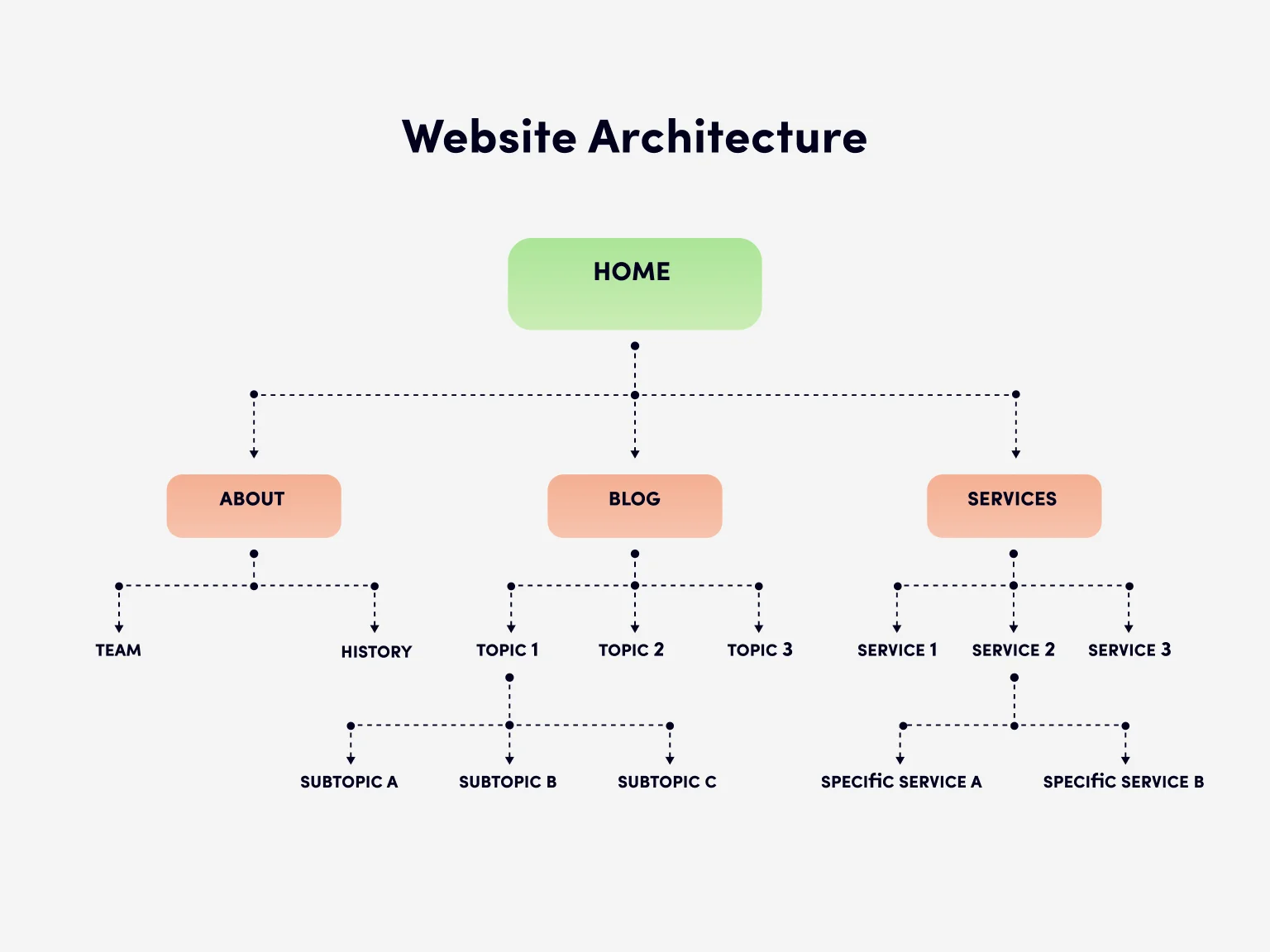
A website’s success depends on more than great content and backlinks. One of the most overlooked yet critical aspects of SEO is site architecture. A well-structured website helps search engines crawl and index pages efficiently while making it easier for users to find the information they need.
An SEO-friendly site architecture can improve rankings, enhance user experience, increase engagement, and support long-term organic growth.
At WaffleBytes, we often find that many websites struggle to rank not because of poor content, but because of confusing site structures that prevent search engines and users from navigating effectively.
In this guide, we’ll explain how to build an SEO-friendly site architecture that supports better visibility and performance in search results.
What Is Site Architecture?
Site architecture refers to the way pages are organized and connected within a website. It includes the hierarchy, navigation, internal linking structure, categories, and URL organization.
Think of site architecture as the blueprint of your website. It determines how users and search engines move from one page to another.
A strong website structure should:
- Be easy to navigate
- Help users find information quickly
- Allow search engines to crawl all important pages
- Distribute authority across the website
- Support future content growth
Why Site Architecture Matters for SEO
Improved Crawlability
Search engines use bots to discover and index pages. A clear structure helps search engines find important content faster.
Better User Experience
Users are more likely to stay on your website when navigation is intuitive and information is easy to locate.
Stronger Internal Linking
Proper site architecture allows authority to flow between pages, helping important pages rank higher.
Higher Search Rankings
Search engines favor websites that provide a logical structure and positive user experience.
Easier Scalability
A well-planned architecture makes it easier to add new content, categories, and products without creating SEO issues.
Characteristics of an SEO-Friendly Site Architecture
Simple Hierarchy
Your website should follow a logical structure.
Example:
Home
→ Services
→ SEO Services
→ Local SEO
→ Ecommerce SEO
→ Technical SEO
Users and search engines should be able to reach important pages within a few clicks.
Flat Site Structure
A flat structure ensures important pages are accessible without excessive navigation.
Ideal:
Home → Category → Page
Avoid:
Home → Category → Subcategory → Subcategory → Page
The fewer clicks required, the better.
Clear Navigation
Website navigation should be simple and consistent.
Include:
- Main menu
- Footer navigation
- Breadcrumbs
- Internal links
These elements help both users and search engines understand your site’s structure.
Organize Content Into Categories
Grouping related content improves usability and topical relevance.
Example for a digital marketing agency:
Services
- SEO Services
- PPC Management
- Social Media Marketing
- Web Development
Resources
- Blog
- Case Studies
- Guides
- Industry News
This structure helps search engines understand content relationships.
Use SEO-Friendly URLs
URLs should be clean, descriptive, and easy to understand.
Good Example:
/seo-services/local-seo/
Bad Example:
/page?id=12345
Best practices:
- Use keywords naturally
- Keep URLs short
- Avoid unnecessary parameters
- Use hyphens instead of underscores
Implement Strong Internal Linking
Internal links help distribute authority across your website.
Benefits include:
- Better crawlability
- Increased page authority
- Improved user engagement
- Enhanced topic relevance
Example:
A blog about local SEO can link to your Local SEO Service page.
This creates stronger contextual relationships between pages.
Use Breadcrumb Navigation
Breadcrumbs improve navigation and help search engines understand page hierarchy.
Example:
Home > Services > SEO Services > Local SEO
Benefits:
- Improved user experience
- Better crawlability
- Enhanced search result appearance
Create Topic Clusters
Topic clusters help establish authority around specific subjects.
Example:
Pillar Page
SEO Services
Supporting Content
- Technical SEO Guide
- Local SEO Checklist
- Ecommerce SEO Strategies
- Link Building Techniques
These interconnected pages strengthen topical relevance and improve rankings.
Optimize XML Sitemaps
XML sitemaps help search engines discover important pages.
Your sitemap should:
- Include key pages
- Exclude duplicate pages
- Update automatically
- Be submitted to Google Search Console
Improve Mobile Navigation
Google uses mobile-first indexing, making mobile usability essential.
Ensure:
- Responsive design
- Simple menus
- Fast page loading
- Easy navigation on small screens
A poor mobile experience can negatively impact rankings and conversions.
Avoid Common Site Architecture Mistakes
Orphan Pages
Pages without internal links are difficult for search engines to discover.
Duplicate Content
Multiple URLs containing similar content can confuse search engines.
Deep Page Structures
Pages buried too deep within the site hierarchy may receive less authority.
Broken Internal Links
Broken links harm user experience and waste crawl budget.
Poor URL Organization
Inconsistent URL structures create confusion for users and search engines.
Site Architecture for Ecommerce Websites
Ecommerce websites require special attention due to the large number of products and categories.
Recommended structure:
Home
→ Category
→ Subcategory
→ Product Page
Example:
Home
→ Jewelry
→ Necklaces
→ Gold Pendant Necklace
Additional recommendations:
- Use category pages strategically
- Implement product schema
- Create SEO-friendly filters
- Optimize faceted navigation
How Site Architecture Supports AI Search and GEO
Search engines are increasingly powered by artificial intelligence and generative search experiences.
A strong site architecture helps:
- AI systems understand content relationships
- Improve Generative Engine Optimization (GEO)
- Support Answer Engine Optimization (AEO)
- Increase visibility in AI-generated responses
Structured websites provide clearer signals to search engines and AI-powered search platforms.
Tools to Analyze Site Architecture
Useful tools include:
- Google Search Console
- Google Analytics
- Screaming Frog
- Ahrefs
- SEMrush
- Sitebulb
These tools help identify crawl issues, orphan pages, internal linking gaps, and structural weaknesses.
How WaffleBytes Helps Businesses Build SEO-Friendly Site Architecture
At WaffleBytes, we design and optimize website structures that improve search visibility, user experience, and conversion performance.
Our services include:
- Website architecture planning
- SEO audits
- Internal linking strategies
- Ecommerce SEO structure optimization
- Technical SEO implementation
- Site migration planning
- GEO and AEO optimization
We create scalable website structures designed for long-term SEO success.
An SEO-friendly site architecture serves as the foundation of every successful website. It helps search engines crawl and understand your content while improving user experience and supporting higher rankings.
Whether you’re launching a new website or optimizing an existing one, investing in proper site architecture can significantly improve your SEO performance and future growth.
At WaffleBytes, we help businesses build search-engine-friendly websites that drive traffic, improve visibility, and generate measurable results.
SEO-friendly site architecture is the organization of website pages in a way that improves crawlability, user experience, and search engine visibility.
A well-structured website helps search engines discover content, distribute authority, and improve rankings.
A flat structure allows users and search engines to reach important pages within a few clicks from the homepage.
Internal links help connect related content, distribute page authority, and improve crawlability
Yes. A clear, structured website helps AI-powered search engines understand content relationships, improving GEO and AEO performance.
